
Nov 24
/
Theo Botha
Joseph Pilates Would Probably Unfollow You!
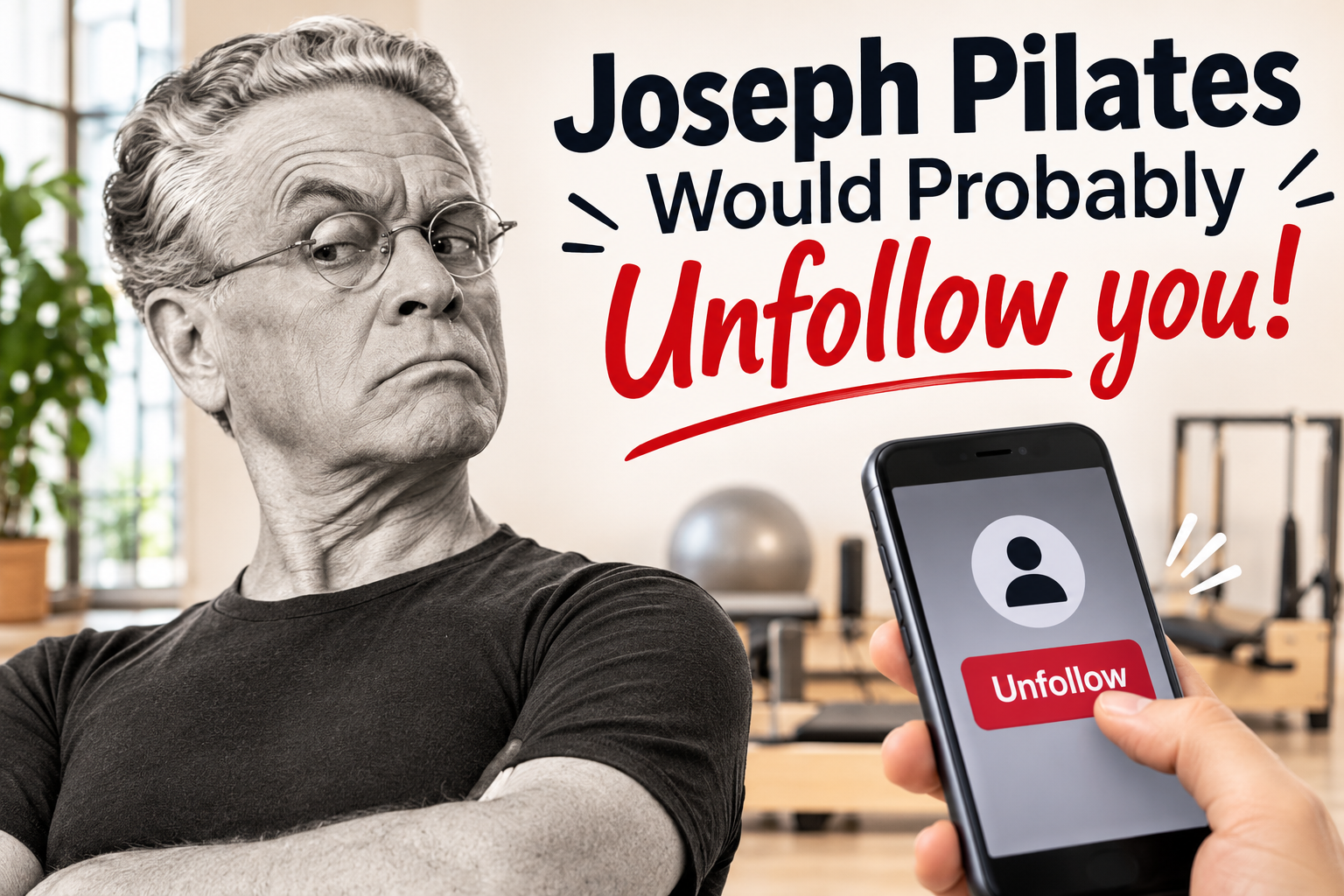
Have we become so obsessed with what Pilates looks like that we have forgotten what Pilates is actually about? Imagine Joseph Pilates scrolling through Instagram today.
Matching activewear, perfectly positioned cameras, pastel-coloured Reformers and someone performing an exercise that looks like a cross between Pilates, Cirque du Soleil and a desperate attempt to retrieve something from underneath the bed.
Would he press like, leave a rather opinionated comment… or simply unfollow? After almost 30 years in the Pilates industry, I find myself asking an increasingly important question:
When did Pilates become more about performing movement than understanding movement?
At Body Intellect, this question is at the heart of our teaching philosophy. We choose to delve deeper, challenge conventional thinking and understand the science behind the movement. We are not interested in developing show-offs, but rather knowledgeable, intuitive and intelligent movement professionals.
From Contrology to Choreography
In 1945, Joseph Pilates published Return to Life Through Contrology. Interestingly, the book was not titled How to Look Fabulous on a Reformer.
He wrote:
“Physical fitness is the first requisite of happiness.”
His vision was to develop a balanced body and mind capable of navigating everyday life with ease, efficiency and enjoyment. Yet, somewhere along the way, parts of our industry have become increasingly preoccupied with how movement looks rather than what movement achieves.
The more complicated the exercise, the more impressive the video. The more spectacular the choreography, the more likes it receives. But since when did complexity become synonymous with quality? And since when did the number of followers become a qualification in human movement?
The Instagram Muscle
There appears to be a new muscle in the human body. I call it the Instagram muscle. It responds exceptionally well to good lighting, flattering camera angles and extraordinary displays of flexibility. Unfortunately, its development tells us very little about someone's ability to teach movement.
Joseph Pilates wrote:
“Concentrate on the correct movements EACH TIME YOU EXERCISE.”
Not the most complicated movement. Not the most photogenic movement. Not the movement that nobody else can do. His emphasis was on quality.
At Body Intellect, we believe that the sophistication of an instructor is not measured by the complexity of the exercises they teach, but by the depth of understanding behind their choices.
Sometimes, the most valuable exercise for a client is the least impressive one in the room.
Innovation or Dilution?
Joseph Pilates was an innovator. It would be somewhat ironic to honour an innovator by refusing to innovate. At Body Intellect, we embrace the evolution of Pilates, integrating contemporary knowledge of anatomy, biomechanics and movement science while respecting the foundations of the method.
But innovation should add depth, not simply decoration. Creativity should serve a purpose, and complexity should add value.
Just because you can doesn't necessarily mean you should.
So, Would Joseph Pilates Follow You?
The next time you teach a class, create a Pilates video or introduce a new exercise, ask yourself:
• What is the purpose of this movement?
• What is the body gaining from it?
• Am I trying to impress or make a difference?
• Would I still choose this exercise if nobody were watching?
There is nothing wrong with beautiful movement, beautiful studios or even beautiful leggings. But beneath the aesthetics, there must be substance.
Perhaps our industry needs a little less performance and a little more purpose.
A little less ego and a little more education.
A little less showing off and a little more showing up for the person in front of us.
Because the real beauty of Pilates lies not in how extraordinary we can make an exercise look, but in how extraordinarily we can influence someone's life through movement.
And perhaps, just perhaps, Joseph Pilates would find a few more people worth following.
Theo Botha
Body Intellect
Reference: Pilates, J. H. & Miller, W. J. (1945). Return to Life Through Contrology. The Christopher Publishing House.

Making quality, tailored, experience driven Pilates teacher training
accessible & empowering.
Physical Studio: No. 3, 14th Street Menlo Park
(corner 14th street and Brooklyn road)
Courses
Copyright © 2024
Let me know!
Unfortunately there are no Complimentary Workshops scheduled at the moment, sign up to our mailing list and we will let you know when we have a workshop coming up.
Thank you!
Created with